Mastering the Final Touch: How to Teach Students to Write Powerful Concluding Sentences
In the world of writing, the concluding sentence is often the most overlooked part of the paragraph. For many students—especially those preparing for the GED® RLA test—the struggle isn’t just starting a thought; it’s knowing how to finish it without simply trailing off or repeating the topic sentence word-for-word.
A strong conclusion does more than just stop the writing; it provides “closure,” reinforcing the main idea and leaving the reader with a sense of completeness. If your students are struggling with “abrupt endings,” here is a guide to mastering the art of the wrap-up.
Why Concluding Sentences Matter for GED Success
On the GED Reasoning Through Language Arts (RLA) exam, the extended response and reading comprehension sections require a solid understanding of paragraph structure. Scorers look for organization and clarity. A paragraph without a concluding sentence feels like a bridge that ends halfway across the river—it doesn’t matter how well the rest is built if you can’t get to the other side.
A great concluding sentence should:
- Summarize the main point without being repetitive.
- Provide a “final thought” or a call to action.
- Signal the end of the discussion using appropriate transition words.
3 Strategies for Writing Better Conclusions
1. The “Restate, Don’t Repeat” Rule
Many students think they should just copy their topic sentence. Instead, teach them to use synonyms. If the topic sentence is “Dogs make excellent companions,” the conclusion shouldn’t be the same. Instead, try: “Because of their loyalty and affection, it is clear why dogs are considered man’s best friend.”
2. Use Transition “Signposts”
Help students signal to the reader that the end is near. Effective “signposts” include:
- As you can see…
- Clearly…
- Ultimately…
- For these reasons…
- Now you know why…
3. The “So What?” Test
Encourage students to ask themselves, “So what?” after reading their paragraph. The concluding sentence should answer that question by emphasizing why the information they just shared is important or true.
Featured Resource: How to Write Concluding Sentences
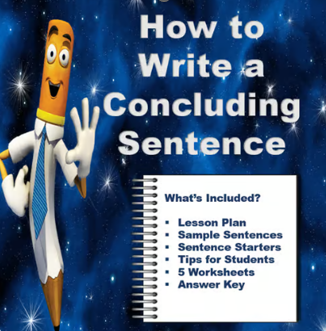
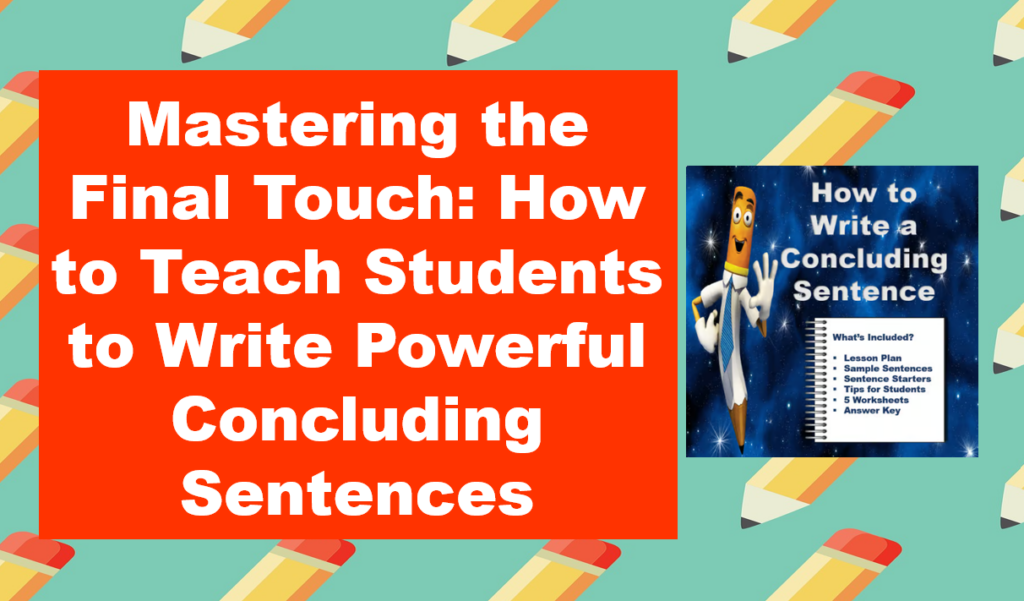
If you are looking for a “no-prep” way to teach this skill, my How to Write Concluding Sentences workbook is designed specifically to bridge the gap between fragmented ideas and polished paragraphs.
This 9-page resource is perfect for GED prep, adult learners, or elementary writers needing a boost. It includes:
- A Complete Teaching Guide: Step-by-step instructions to take the guesswork out of your lesson.
- Sentence Starters List: A “cheat sheet” of stems like “That is why” and “As you can see.”
- 5 Practice Worksheets: Engaging topics that keep students motivated while they practice.
- Answer Key: Includes multiple sample responses to help with grading and modeling.
Final Thoughts for Educators
Teaching writing is a marathon, not a sprint. By focusing on the “anchor” of the paragraph—the concluding sentence—you give your students the tools to write with more authority and confidence. Whether they are writing an essay for a standardized test or a professional email, the ability to wrap up an idea is a skill that will serve them for a lifetime.
Happy Writing!