How to Pass GED Science: The Ultimate Symbiosis & Ecology Study Guide
When you’re prepping for the GED Science Test, it’s easy to get overwhelmed by the sheer amount of information. But if you want to work smarter, not harder, you need to focus on “high-yield” topics—concepts that show up frequently and test multiple skills at once.
Symbiosis is exactly that kind of topic. It isn’t just about memorizing definitions; it’s about understanding how life interacts, interpreting data, and drawing conclusions from scientific texts.
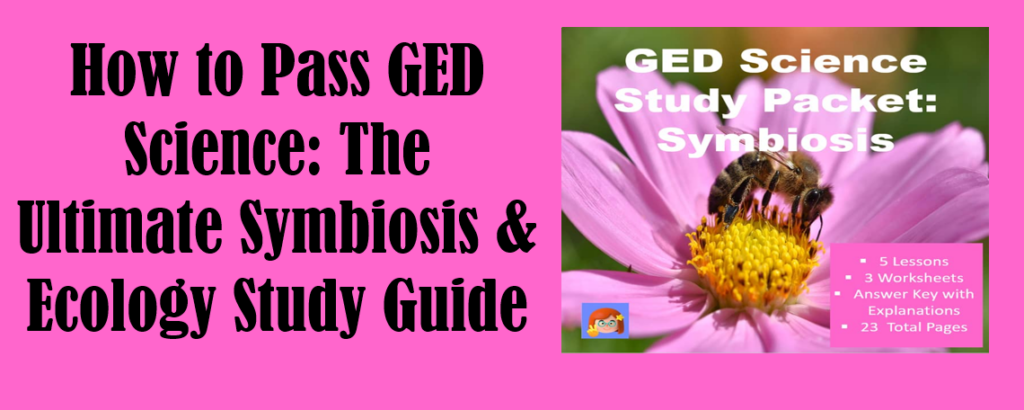
To help you master this essential subject, I’ve developed a comprehensive GED Science Study Packet: Symbiosis specifically designed for adult learners who need clear, no-nonsense instruction.
What’s Inside the Symbiosis Study Packet?
This 23-page resource moves beyond simple vocabulary. It is structured to take you from a total beginner to a data-analysis pro through five targeted lessons and three intensive practice worksheets.
1. Five Detailed Lessons
We break down the complex web of ecological relationships into five digestible parts:
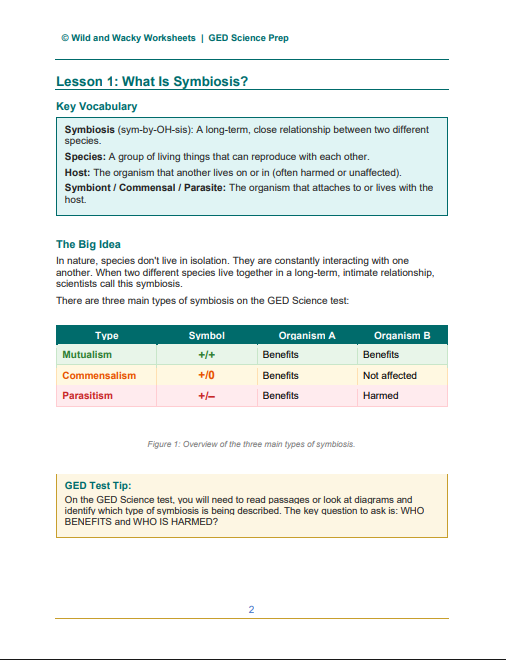
- Lesson 1: What Is Symbiosis? Understanding the symbiont vs. the host.
- Lesson 2: Mutualism. The “win-win” relationships (like bees and flowers).
- Lesson 3: Commensalism. When one benefits and the other is unaffected.
- Lesson 4: Parasitism. Exploring the world of ectoparasites and endoparasites.
- Lesson 5: Comparing Relationships. Learning to spot the subtle differences that the GED likes to test.
2. Specialized Focus on Nitrogen-Fixing Bacteria
One of the most common ways symbiosis appears on the GED is through questions about Rhizobium and nitrogen-fixing bacteria in agriculture. Our packet includes a deep dive into this specific relationship so you aren’t caught off guard on test day.
3. Real-World Data Literacy
The GED Science test is 80% about your ability to read graphs and tables. Practice Worksheet 3 in this bundle requires you to analyze multi-year data tables, calculate trends, and predict environmental impacts—exactly the kind of “Science Practices” you’ll face in the testing center.
Why This Resource Works for Adult Learners
- No-Prep & Self-Teaching: Whether you are studying at home or using this in a classroom, the text-heavy lessons are designed to be self-explanatory.
- GED Test Tips: I’ve included specific callouts that highlight how these topics are framed on the exam (e.g., “Who benefits and who is harmed?”).
- Professional Rigor: While the Wild and Wacky Worksheets brand is all about engagement, the content maintains the professional level required for high-stakes testing.
- Complete Answer Key: Every question comes with a detailed explanation, so you understand the why behind the right answer.
Aligning with the Standards
This packet doesn’t just cover the basics; it is strictly aligned with the GED Assessment Targets (LS.a.1, LS.b.1) and Next Generation Science Standards (NGSS). It focuses on the flow of energy and nutrients in ecosystems and the mathematical representations of biodiversity.
Ready to Level Up Your Science Score?
Don’t let ecology questions trip you up. Grab the GED Science Study Packet: Symbiosis today and start building the data literacy skills you need to pass the GED with flying colors!
Looking for more? Check out our other popular resources like the GED Science Bell Ringers.