LGBTQ History: An Essential Lesson
Why LGBTQ History can be an Essential Lesson in your Adult Education Classroom
As adult education instructors, our primary goal is to equip students with the critical thinking skills, historical knowledge, and reading stamina they need to pass the GED test. However, building an effective classroom goes beyond memorizing dates and formulas—it relies heavily on creating an environment where every learner feels seen and valued.
Integrating LGBTQ+ history into your social studies curriculum isn’t just about inclusivity; it is an essential tool for boosting student engagement, sharpening analysis skills, and preparing adult learners for the diverse perspectives they will encounter on the exam and in life.
Here are four practical, impactful ways to seamlessly integrate this vital history into your existing GED lesson plans.
1. Analyze Core Civil Rights Documents
The GED Social Studies test heavily emphasizes analyzing historical documents, letters, and speeches. This makes the modern Civil Rights Movement the perfect entry point for inclusive history.
- The Strategy: Introduce your students to Bayard Rustin, a brilliant strategist who was a chief organizer of the 1963 March on Washington.
- The Lesson: Have students read and analyze excerpts from Rustin’s speeches or writings on economic justice. Treat these texts exactly as you would a speech by Martin Luther King Jr. or a presidential address—ask students to identify the main argument, evaluate the supporting evidence, and determine the author’s tone.
2. Connect the Past to the Present with Supreme Court Cases
Civics and government make up a massive 50% of the GED Social Studies exam. Students must understand how the judicial branch works and how precedent changes over time.
- The Strategy: Examine landmark legal battles alongside traditional curriculum staples like Brown v. Board of Education.
- The Lesson: Walk students through a timeline leading up to the historic 2015 Obergefell v. Hodges ruling or the 2020 Bostock v. Clayton County decision (which protected LGBTQ+ employees from discrimination). Have students map out how the Fourteenth Amendment’s Equal Protection Clause was applied in these modern cases, reinforcing a core civics concept that frequently appears on the test.
3. Utilize Political Cartoons for Critical Thinking
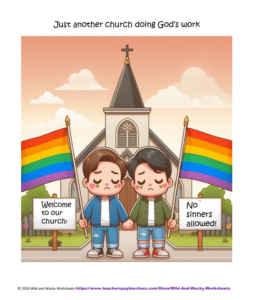
Interpretation of visual literacy—specifically political cartoons—is a notoriously tricky area for many adult learners. Cartoons require students to decode symbolism, satire, and perspective quickly.

- The Strategy: Use historical graphics from major turning points, such as the early Pride marches or the legislative battles of the late 20th century.
- The Lesson: Display a cartoon regarding equal rights or government advocacy from the 1970s or 1980s. Guide your classroom through a standard analysis framework: What symbols do you see? What is the cartoonist’s bias? Who is the intended audience? This builds the exact visual decoding muscles required for high-percentile test scores.
4. Foster Community Through Shared Stories
Adult education classrooms are beautifully diverse, often spanning multiple generations, backgrounds, and life experiences. Bringing hidden histories to light encourages open dialogue and builds a stronger peer community.
- The Strategy: Focus on the intersectionality of historical figures, showing that no movement happens in a vacuum.
- The Lesson: Highlight figures like Marsha P. Johnson and Sylvia Rivera when discussing the social upheaval of the late 1960s. Use these narratives to spark discussions on how grassroots movements form, the power of community organizing, and how standard citizens can influence national policy.
Implementing GED LGBTQ Lessons: Final Thoughts
Incorporate these lessons not as separate, isolated units, but as a natural, woven thread within your broader American History and Civics frameworks. When adult learners see complex, real-world struggles reflected in their study materials, their engagement skyrockets.
By teaching an inclusive curriculum, you aren’t just helping your students pass a test—you are empowering them to understand the full, rich fabric of the society they are preparing to lead.
You may also like this article: LGBTQ Article