How to Use Exit Tickets to Improve Learning in the GED Classroom
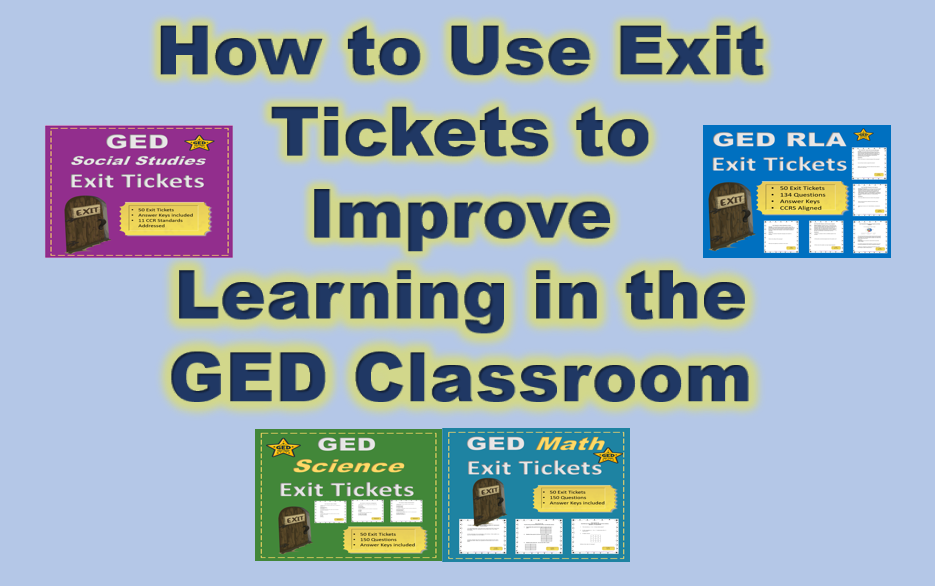
In the fast-paced, high-stakes world of GED preparation, adult learners come from a wide range of educational backgrounds, life experiences, and academic skill levels. With so much ground to cover and so little time to do it, GED instructors are constantly searching for efficient, meaningful ways to assess student understanding, adjust instruction, and boost learner confidence. One powerful yet often underused tool that can make a significant difference in GED classrooms is the exit ticket.
Exit tickets are short, informal assessments given at the end of a lesson. In just a few minutes, they can provide valuable insight into what students have learned, what they’re struggling with, and how teachers can better support their progress. While they’re commonly used in K–12 settings, exit tickets are just as effective — if not more so — in adult education environments. Let’s explore how exit tickets can be a game-changer in GED classrooms.
What Are Exit Tickets?
An exit ticket is a quick activity or question(s) given to students at the end of a lesson. It serves as a snapshot of student learning and offers teachers real-time feedback. Depending on the goal, an exit ticket might include:
- A multiple-choice question to assess content mastery
- A short-answer reflection on what students learned
- A math problem aligned to a specific skill
- A request to rate their understanding on a scale of 1 to 5
Exit tickets don’t need to be formal or time-consuming. In fact, the best ones are simple, targeted, and take no more than 3–5 minutes.
Why Use Exit Tickets in the GED Classroom?
GED students are often juggling multiple responsibilities — jobs, family, finances — while trying to fill in educational gaps from earlier in life. In this unique context, exit tickets offer several powerful benefits:
1. Immediate Feedback for Instructors
When you collect exit tickets at the end of a lesson, you gain immediate insight into who “got it” and who didn’t. This allows you to:
- Identify common misunderstandings
- Spot trends in learning gaps
- Adjust instruction the very next day
Instead of waiting for unit tests or practice exams, teachers can make real-time course corrections, improving outcomes and saving valuable instructional time.
2. Reinforcement of Key Concepts
GED learners benefit from frequent reinforcement, especially when tackling abstract or unfamiliar content like algebra, grammar rules, or test-taking strategies. Exit tickets help solidify learning by asking students to apply what they just learned before walking out the door. It increases retention by turning passive listening into active engagement.
For example, after a lesson on comma usage, students could complete a quick exit ticket editing a sentence. Or after a math lesson on ratios, they could solve one simple, related problem.
3. Student Reflection and Self-Awareness
Exit tickets aren’t just for teachers — they help students reflect on their own understanding. When students are asked to rate their confidence level or explain what they found challenging, they begin to take ownership of their learning. This kind of metacognition (thinking about thinking) helps students become more independent and proactive learners — a vital skill for GED test success.
Prompts like:
- “What’s one thing you learned today?”
- “What do you still have questions about?”
- “Rate your understanding of today’s lesson from 1–5.”
…all promote reflection, which is crucial for adult learners who may have struggled in traditional school settings.
4. Progress Monitoring and Documentation
Adult education programs are often required to track student progress and demonstrate instructional effectiveness. Exit tickets provide a simple, consistent way to document ongoing formative assessment. By collecting and organizing exit tickets over time, teachers can build a clear picture of each student’s growth, helping with:
- Instructional planning
- Goal setting
- Student conferences
- Reports to program administrators or funders
5. Encouragement and Motivation
GED students need frequent, positive feedback. A well-designed exit ticket can help students realize how much they’re learning, especially when they might feel overwhelmed by the road ahead. For example, answering a problem correctly or identifying a skill they’ve mastered gives students a sense of accomplishment.
It also helps build momentum — when students see progress every day, they’re more likely to come back tomorrow.
Tips for Using Exit Tickets Effectively
To make the most of exit tickets in your GED classroom, keep these best practices in mind:
✅ Be Purposeful
Every exit ticket should align with the day’s learning objective. Don’t just make it busy work.
✅ Keep It Simple
One to three questions is usually enough. You want students to complete it in under 5 minutes.
✅ Mix It Up
Vary the format — use multiple choice, open-ended, sentence starters, or even visuals (especially in science or social studies).
✅ Use the Data
Review the responses and use the information to guide the next lesson. Exit tickets are only valuable if you respond to what they reveal.
✅ Create a Safe Space
Encourage honesty. Let students know the goal is to help them, not to grade them.
Examples of Exit Tickets for GED Subjects
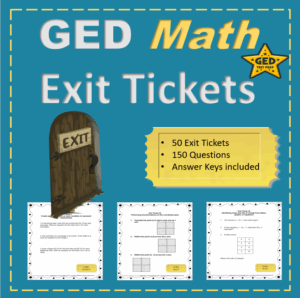
Math Example (Algebra):
“Solve: 3x – 5 = 16”
“What step would you do first?”
If you would like to save time, click on the link below to purchase a set of 50 math exit tickets.
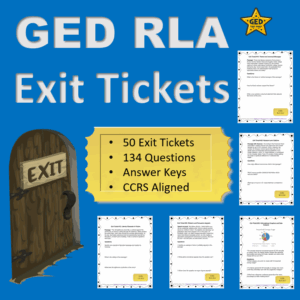
RLA Example (Reading Comprehension):
“What is the main idea of the passage we read today?”
“Name one supporting detail.”
If you would like to save time, click on the link below to purchase a set of 50 RLA exit tickets.
Social Studies Example:
“List one cause and one effect of the Great Depression.”
If you would like to save time, click on the link below to purchase a set of 50 Social Studies exit tickets.

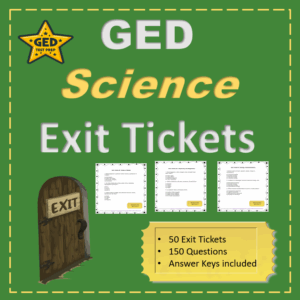
Science Example:
“Explain one way humans impact the carbon cycle.”
If you would like to save time, click on the link below to purchase a set of 50 science exit tickets.
Final Thoughts: Small Tool, Big Impact
Exit tickets may be small, but their impact in the GED classroom can be enormous. In just a few minutes a day, they help instructors fine-tune lessons, support student growth, and create a learning environment built on feedback and reflection.
For GED teachers facing the daunting task of closing educational gaps and preparing students for high-stakes exams, exit tickets offer a practical, low-prep, high-yield strategy. By implementing this simple tool consistently, you can help your learners build confidence, mastery, and the momentum they need to reach their goals.