
Transforming GED Instruction Through Social Emotional Learning

Transforming GED Instruction Through Social Emotional Learning:
In the realm of adult education, preparing students for the General Educational Development (GED) test often focuses heavily on academic content. However, a growing body of research suggests that integrating social emotional learning (SEL) into GED instruction can significantly enhance student outcomes. This comprehensive approach acknowledges that success depends not only on academic knowledge but also on developing crucial life skills that support learning and personal growth.
Understanding the GED Student Experience (for maximizing social emotional learning)
Adult learners pursuing a GED typically face unique challenges. Many have experienced previous educational setbacks, juggle multiple responsibilities including work and family, and may harbor negative self-perceptions about their academic abilities. These factors create a complex learning environment where emotional and psychological barriers can significantly impact academic progress.
The typical GED student might:
- Experience test anxiety stemming from previous academic failures
- Struggle with time management due to competing life responsibilities
- Feel embarrassment or shame about needing to obtain an alternative credential
- Lack confidence in their ability to succeed academically
- Face financial pressures that make consistent attendance difficult
These challenges highlight why addressing only the academic aspects of GED preparation is insufficient. By incorporating social emotional learning resources, educators can help students develop the resilience, self-awareness, and emotional regulation skills necessary to overcome these obstacles.
Core SEL Competencies Relevant to GED Success
Social emotional learning focuses on five core competencies that are particularly relevant to adult learners:
Self-Awareness
Self-awareness involves recognizing one’s emotions, thoughts, and values and understanding how they influence behavior. For GED students, developing self-awareness means identifying learning strengths and weaknesses, understanding emotional triggers that may interfere with learning, and recognizing negative self-talk that undermines confidence.
Self-Management
This competency encompasses the ability to regulate emotions, thoughts, and behaviors effectively in different situations. GED students benefit from learning stress management techniques, developing focused attention skills, and establishing effective study habits that work with their individual circumstances.
Social Awareness
Social awareness includes the capacity to understand the perspectives of others and empathize with people from diverse backgrounds. In GED classrooms, this translates to creating supportive peer learning communities where students respect different learning paces and styles.
Relationship Skills
These skills enable students to establish and maintain healthy relationships with diverse individuals and groups. For adult learners, this means communicating effectively with instructors, forming study groups, and seeking help when needed without feeling diminished.
Responsible Decision-Making
This competency involves making constructive choices about personal behavior and social interactions. GED students must regularly make decisions about prioritizing study time, managing competing responsibilities, and persisting through challenging material.
Click on the icon below to discover a social emotional learning resource made specifically for GED students:
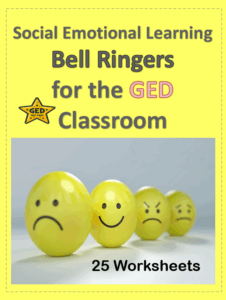
Practical Social Emotional Learning Implementation Strategies for GED Classrooms
Creating Emotional Safety
Strategy: Classroom Agreements and Norms
Establish collaborative classroom agreements that create psychological safety. These might include:
- Respecting different learning paces
- Maintaining confidentiality about personal struggles
- Celebrating small victories publicly
- Normalizing mistakes as part of the learning process
Implementation Example: Begin each term by co-creating classroom norms with students. Post these visibly in the classroom and revisit them periodically. When new students join, integrate them into the community by introducing the norms and inviting their input.
Building Community and Belonging

Strategy: Structured Relationship Building
Intentionally design opportunities for students to connect with each other beyond academic content.
Implementation Example: Begin classes with brief check-in circles where students share one challenge and one success from their week. This practice builds empathy among learners while normalizing both struggles and achievements.
Developing Growth Mindset

Strategy: Reframing Failure and Struggle
Help students understand that intelligence and ability are not fixed traits but can be developed through effort and persistence.
Implementation Example: Create a “Mistake of the Week” ritual where the instructor shares a personal learning mistake and what they learned from it. Invite students to voluntarily share their own productive mistakes. This reframes errors as valuable learning opportunities rather than evidence of inability.
Managing Test Anxiety

Strategy: Stress Reduction Techniques
Teach practical techniques for managing stress and anxiety, particularly around testing situations.
Implementation Example: Begin test prep sessions with brief mindfulness exercises. Teach simple breathing techniques that students can use during actual testing situations. Create a “test anxiety toolkit” handout with strategies students can reference outside of class.
Building Academic Tenacity
Strategy: Progress Monitoring and Celebration
Help students track their own progress and recognize growth over time.
Implementation Example: Implement personal learning journals where students regularly reflect on their learning journey. Create visual progress trackers that help students see movement toward their goals. Celebrate both academic milestones and SEL growth.
Integrating Social Emotional Learning Into Core GED Subject Areas
Mathematics
Mathematics often triggers anxiety in adult learners based on previous negative experiences. SEL integration can help address this emotional barrier while building mathematical proficiency.
Strategy: Normalize Math Anxiety
Explicitly discuss math anxiety as a common experience that can be overcome rather than a personal failing.
Implementation Example: Begin a challenging math unit by having students anonymously share their feelings about the subject on index cards. The instructor then reads these aloud, highlighting common themes and normalizing these feelings. Follow with a discussion about strategies for working through math anxiety.
Strategy: Collaborative Problem-Solving
Structure opportunities for students to work together on complex problems, building both mathematical understanding and social skills.
Implementation Example: Use think-pair-share activities where students first attempt problems individually, then compare approaches with a partner, and finally discuss as a whole class. This builds mathematical communication skills while reducing the isolation often felt when struggling with difficult concepts.
Language Arts
Language arts instruction offers natural opportunities to explore emotional intelligence alongside literacy skills.
Strategy: Personal Connection to Texts
Connect reading comprehension to personal reflection and emotional intelligence.
Implementation Example: When analyzing texts for the GED, include questions that connect to personal experience: “How would you feel in this character’s situation?” or “What values are reflected in this author’s perspective, and how do they compare to your own?” These questions develop both critical reading skills and emotional awareness.
Strategy: Writing for Personal Growth
Use writing assignments that encourage self-reflection and personal growth alongside skill development.
Implementation Example: Assign reflective writing prompts that connect to GED content while promoting self-awareness: “Describe a time when you overcame a significant challenge. What strategies did you use that might help you succeed in your GED journey?” Provide structured feedback on both writing mechanics and depth of reflection.
Science and Social Studies
These content areas provide opportunities to develop critical thinking alongside perspective-taking and ethical decision-making.
Strategy: Real-World Application and Ethical Consideration
Connect scientific and historical concepts to students’ lives and contemporary issues.
Implementation Example: When studying scientific processes, include discussions about the ethical implications of scientific advances. When exploring historical events, encourage students to consider multiple perspectives and connect historical patterns to current social issues. These approaches develop both content knowledge and the SEL skill of perspective-taking.
Measuring the Impact of Social Emotional Learning in GED Programs
Effectively integrating SEL into GED instruction requires thoughtful assessment that captures both academic and social-emotional growth.
Academic Indicators
- Improved test scores and completion rates
- Increased attendance and program persistence
- Higher rates of post-GED educational advancement
Social-Emotional Indicators
- Enhanced self-efficacy as measured by pre/post surveys
- Improved classroom participation and collaboration
- Student self-reported confidence and reduced anxiety
- Development of effective study habits and learning strategies
Implementation Assessment
- Classroom observations of SEL integration
- Instructor self-assessment of SEL teaching practices
- Student feedback on classroom emotional climate
- Tracking of SEL strategy usage by students
Challenges and Considerations

Implementing SEL in adult education contexts presents unique challenges:
Time Constraints
GED programs often operate under tight timeframes with significant content to cover. Instructors may feel that adding SEL components detracts from essential academic instruction.
Solution: Rather than treating SEL as an add-on, integrate these skills into existing content instruction. For example, incorporate brief mindfulness practices at the beginning of classes, use academic content as a vehicle for developing collaborative skills, and embed reflection into regular learning activities.
Instructor Preparation
Many GED instructors have strong content knowledge but may lack training in facilitating social-emotional skill development.
Solution: Provide professional development focused specifically on SEL integration in adult learning contexts. Create peer learning communities where instructors can share effective practices and troubleshoot challenges.
Cultural Responsiveness
Adult learners come from diverse cultural backgrounds with varying perspectives on emotional expression and interpersonal interaction.
Solution: Approach SEL with cultural humility, recognizing that expressions of emotions and social interactions are culturally influenced. Involve students in defining what emotional well-being means in their cultural contexts. Offer multiple pathways for engagement that respect cultural differences.
Conclusion: The Transformative Potential of Social Emotional Learning in GED Education
Integrating social emotional learning into GED instruction represents a holistic approach to adult education that acknowledges the full humanity of learners. By addressing both academic content and the emotional, social, and self-management skills that support learning, educators can significantly enhance student success.
The most effective GED programs recognize that obtaining this credential is not merely about passing a test but about transformative personal growth. When students develop stronger self-awareness, emotional regulation, and interpersonal skills alongside academic knowledge, they gain tools that support not only their educational goals but also their broader life success.
As the field of adult education continues to evolve, the integration of SEL resources into GED instruction stands as a promising approach for creating more effective, engaging, and transformative learning experiences. By nurturing both the minds and hearts of adult learners, educators can help students not only earn their GED but also develop lifelong skills for personal and professional success.

You may also find this article interesting:




It’s great to see a platform dedicated to helping people with their GED journey. The resources and guidance provided here seem invaluable for anyone looking to achieve their high school equivalency. I appreciate the effort put into making education accessible and supportive. However, I’m curious about the specific strategies or success stories that have come from using this platform. Do you have any testimonials or data to share? Also, how do you ensure the content stays updated and relevant for today’s learners? I’d love to hear more about what makes this approach unique compared to other GED prep options. What’s the most common challenge users face, and how do you help them overcome it?
Thank you so much for your questions. I am a novice at website building, and I have a long way to go before my website is what I want it to be. However, I have 22 years experience teaching GED, and in that time, I have helped 100+ students earn their certificate. I truly believe that “people don’t care how much you know until they know how much you care” (excuse the cheesy quote). If you visit my online TPT store (Wild and Wacky Worksheets), you will find unique resources sure to help students of all type reach their GED goals.
That’s an interesting statement, but it doesn’t really explain much about what “The GED Guru” actually is. Is it a website, a blog, or a service? I’d love to know more about its purpose and what it offers. The copyright notice makes it seem official, but it’s hard to judge without context. Do you have any specific resources or tools that could help someone preparing for the GED? Also, how do you ensure the information provided is up-to-date and reliable? I’m curious to hear more about your approach and what sets you apart from other GED resources. Would you mind sharing some success stories or testimonials?
Thank you for your questions. I have a store on Teachers pay Teachers called Wild and Wacky Worksheets (https://www.teacherspayteachers.com/store/wild-and-wacky-worksheets). I have built thegedguru.com website along with my store, but I am still learning the ins and outs of website building. My website currently is not what I would like it to be, but it will eventually better answer the questions you are asking. For the record, I am a seasoned GED teacher, and my oldest resources are only about a year old. Everything I create for GED preparation is College and Career Readiness Aligned and created with GED success as the main goal. The best way to view some testimonials would be to visit the Wild and Wacky Worksheets store where you will currently find 58 reviews.
The GED Guru is currently a website with blog content. I aim to add more features and services as both my business and my website-building knowledge improve.
Right now, the blogs are all I offer.
One of the ways I hope to improve my website in the very near future is by adding a store to showcase my resources. You can view them now by going to the Teachers Pay Teachers Store and type in Wild and Wacky Worksheets.
The resources I create to solve a problem that other materials couldn’t. Does a student need certain skill work? Then, look for my materials that offer specific skill work (inference, author’s purpose, using context clues, etc.)
Having trouble reaching tactile learners? Check out the educational games I offer. Feel like your students need more practice before taking an official test? Download the practice tests I have created.
Success stories? Absolutely! My resources were all created in response to a student’s struggle, and only the ones that actually helped the students are in my store.
It’s inspiring to see someone with so much experience dedicated to helping others achieve their GED. Your 22 years of teaching and helping over 100 students is truly commendable. I love the idea of your TPT store with unique resources—it sounds like a great way to cater to different learning styles. However, I’m still a bit unclear about what exactly “The GED Guru” is. Is it a website, a blog, or a full-fledged service? It would be helpful to have a clearer picture of what you offer. Also, how do you ensure your resources stay relevant with the ever-changing GED requirements? I’d love to hear more about your process and what makes your approach stand out. Do you have any specific examples of how your resources have helped students overcome their biggest challenges?
Thank you so much for your comments and questions!
First, what is “The GED Guru”? It is a website that contains a blog. Is it a full-fledged service? Not at this time. However, I do plan to have more than just blogs in the future. I have lots of ideas about what would be helpful to students and teachers, and I would also be open to suggestions.
Second, all of the resources from my Wild and Wacky Worksheets store are relevant to the current test, and they are CCRS-aligned (College and Career Readiness Standard).
Third, my process is simple. During my 22 years of teaching GED, I couldn’t always find what I needed to reach certain students. Therefore, I often created my own resources/activities. I started selling resources a little over a year ago, and I have been recreating those hand-made materials. When I create, I often recall my past students, and cater materials to what would work for them.
All of my resources are created to solve a problem (usually that a student couldn’t grasp a certain skill). For instance, I have had several students who had trouble retaining new concepts, so I made bell ringers for them. I could honestly give you an example of a student that was helped for every one of my resources because I created them as students encountered challenges that they couldn’t get past with our regular GED materials.